

PRODUCTS
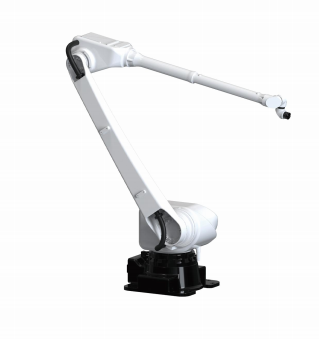
Explosion-proof robot
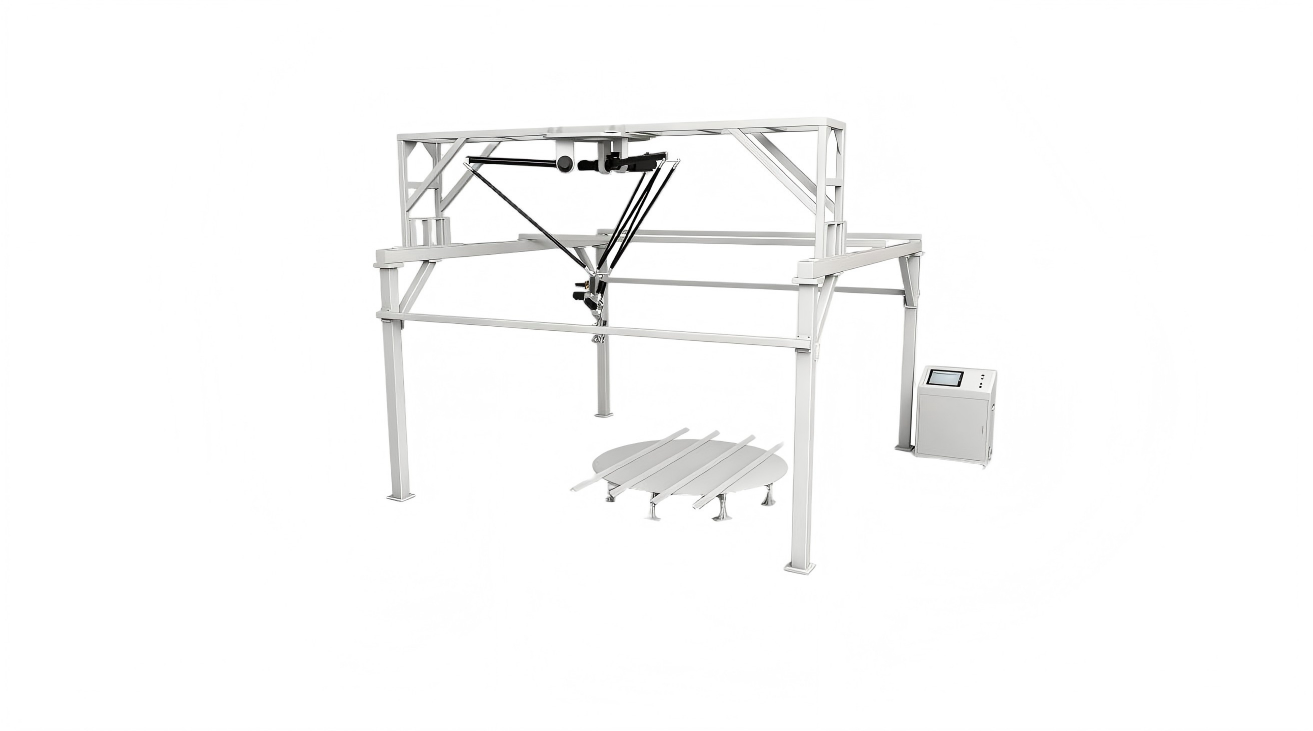
Fiberglass Spraying Workstation
_X9cf66X2.png "PP Spraying Workstation for Jeans")
PP Spraying Workstation for Jeans
_ind9XHmr.png "Turntable Spraying Robot")
Turntable Spraying Robot
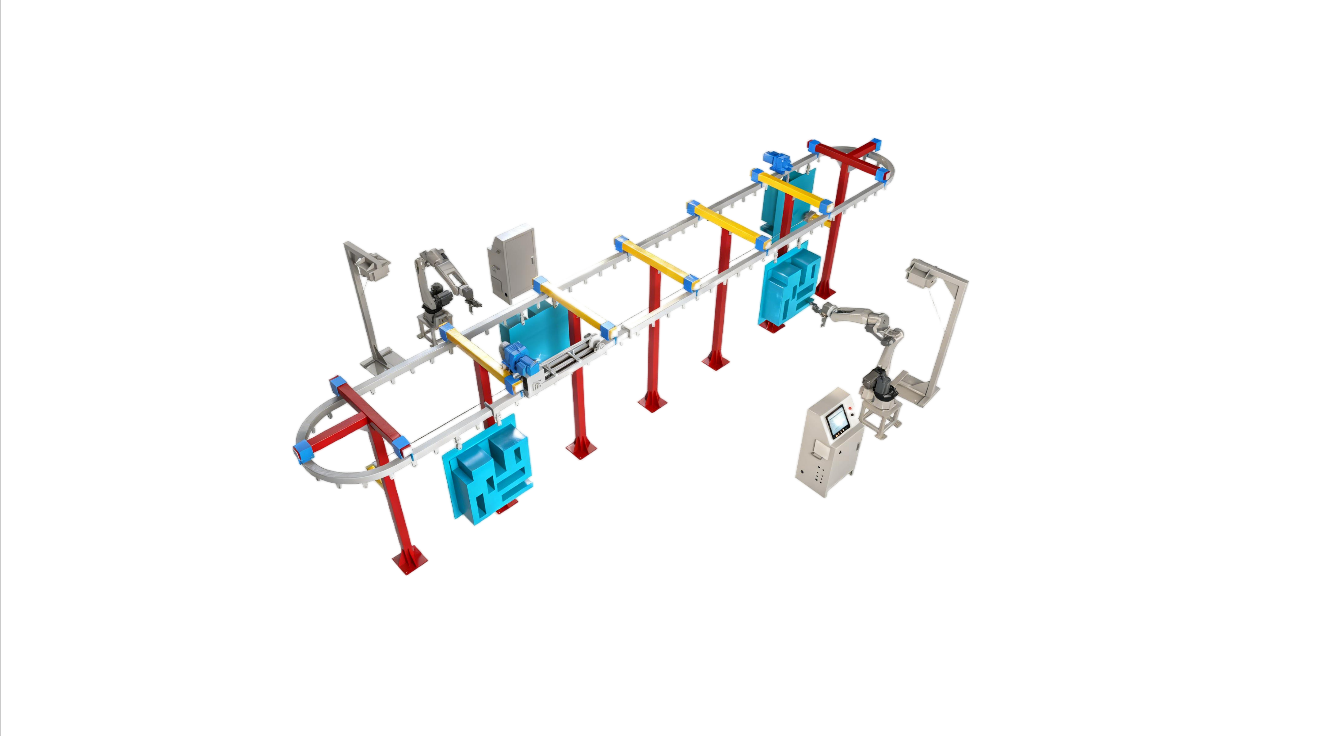
Painting spraying line robots
Revolutionary Arm Span Rotary Robot Transforming Industrial Automation with Unmatched Precision and Efficiency in Modern Manufacturing Processes
In the ever-evolving landscape of industrial automation, a new paradigm is emerging, poised to redefine the very fabric of modern manufacturing. At the forefront of this transformation stands the Revolutionary Arm Span Rotary Robot, a technological marvel engineered to deliver unmatched precision and efficiency. As industries worldwide grapple with demands for higher throughput, superior quality, and flexible production lines, this innovation arrives as a critical solution. Moving beyond the limitations of traditional linear or articulated robotic arms, it introduces a unique rotary architecture with an expansive operational reach, seamlessly integrating into complex workflows. This article delves into the core aspects of this groundbreaking system, exploring how its design and capabilities are setting new benchmarks in automation, from intricate assembly tasks to large-scale material handling, thereby capturing the imagination of engineers and industry leaders alike.
Unparalleled Design and Kinematic Architecture
The foundational genius of the Revolutionary Arm Span Rotary Robot lies in its distinctive kinematic design. Unlike conventional robots constrained by linear axes or multiple rotational joints that create complex singularities, this system is built around a central rotary base supporting one or multiple extended arms. This configuration grants it a vast cylindrical work envelope, allowing it to service multiple stations or a wide area from a single fixed point.
This architecture minimizes the need for extensive linear tracks or the deployment of multiple robots for large work cells. The arms are engineered with advanced composite materials and harmonic drive systems, ensuring exceptional rigidity and minimal deflection at full extension. This results in consistent positional accuracy, even when handling heavy payloads at the furthest reaches of its span, a feat that challenges the capabilities of traditional designs.
Precision Engineering and Sensory Integration
Precision in modern manufacturing is non-negotiable, and this robot elevates it to an art form. Each rotary joint is equipped with ultra-high-resolution encoders and torque sensors, providing real-time feedback to a sophisticated motion controller. This allows for micro-adjustments on the fly, compensating for variables like thermal expansion or minor part misalignment.
Furthermore, the system is designed for seamless integration with a suite of advanced sensors. High-speed 3D vision systems, force-torque sensors, and laser scanners can be mounted directly on the end-effector. This creates a closed-loop system where the robot not only executes pre-programmed paths but also perceives and adapts to its environment. For instance, in precision assembly, it can perform delicate insertions by feeling the forces involved, drastically reducing scrap rates and enabling the handling of fragile or highly valuable components.
Transformative Efficiency and Productivity Gains
The efficiency gains introduced by this robotic platform are transformative. Its expansive arm span and rotary motion enable it to perform tasks at multiple points within its reach without the time-consuming travel associated with Cartesian systems. This drastically reduces cycle times, as the robot can move from one operation to the next along the shortest rotational path.
This efficiency is compounded by its ability to operate continuously with minimal downtime. Designed for 24/7 operation in harsh industrial environments, it features predictive maintenance capabilities through integrated health monitoring of its drives and bearings. By anticipating maintenance needs, it prevents unexpected failures, maximizes uptime, and ensures a smooth, uninterrupted production flow. The cumulative effect is a significant boost in Overall Equipment Effectiveness (OEE), providing a rapid return on investment for manufacturers.
Software Intelligence and Adaptive Flexibility
The hardware's prowess is matched by its intelligent software ecosystem. The robot operates on a unified platform that supports advanced programming, simulation, and data analytics. Programming can be done through intuitive graphical interfaces or even by demonstration, lowering the barrier for deployment and re-tasking.
This software intelligence grants the system remarkable flexibility. In an era of high-mix, low-volume production, the robot can quickly switch between different tasks and tooling. Its adaptive control algorithms allow it to handle part variances and accommodate last-minute changes in production schedules. By integrating with factory-wide Manufacturing Execution Systems (MES) and the Industrial Internet of Things (IIoT), it becomes a data-rich node, contributing to a smarter, more responsive, and interconnected smart factory.
Impact on Modern Manufacturing Processes
The practical impact of this technology across manufacturing sectors is profound. In automotive assembly, it can manage tasks from windshield installation to door panel handling across a wide section of the line. In electronics manufacturing, its precision is invaluable for placing sensitive components on circuit boards or conducting intricate quality inspections.
Beyond traditional sectors, it enables new possibilities in industries like aerospace for composite layup or in logistics for automated sorting and palletizing in vast warehouses. By consolidating operations that previously required multiple specialized machines, it simplifies factory layouts, reduces capital expenditure, and lowers the total cost of ownership. Ultimately, the Revolutionary Arm Span Rotary Robot is not merely an incremental improvement but a cornerstone technology driving the next wave of industrial productivity, resilience, and innovation.
SUBSCRIBE
INQUIRY